Where’s Walda: Olympian Wilma Rudolph
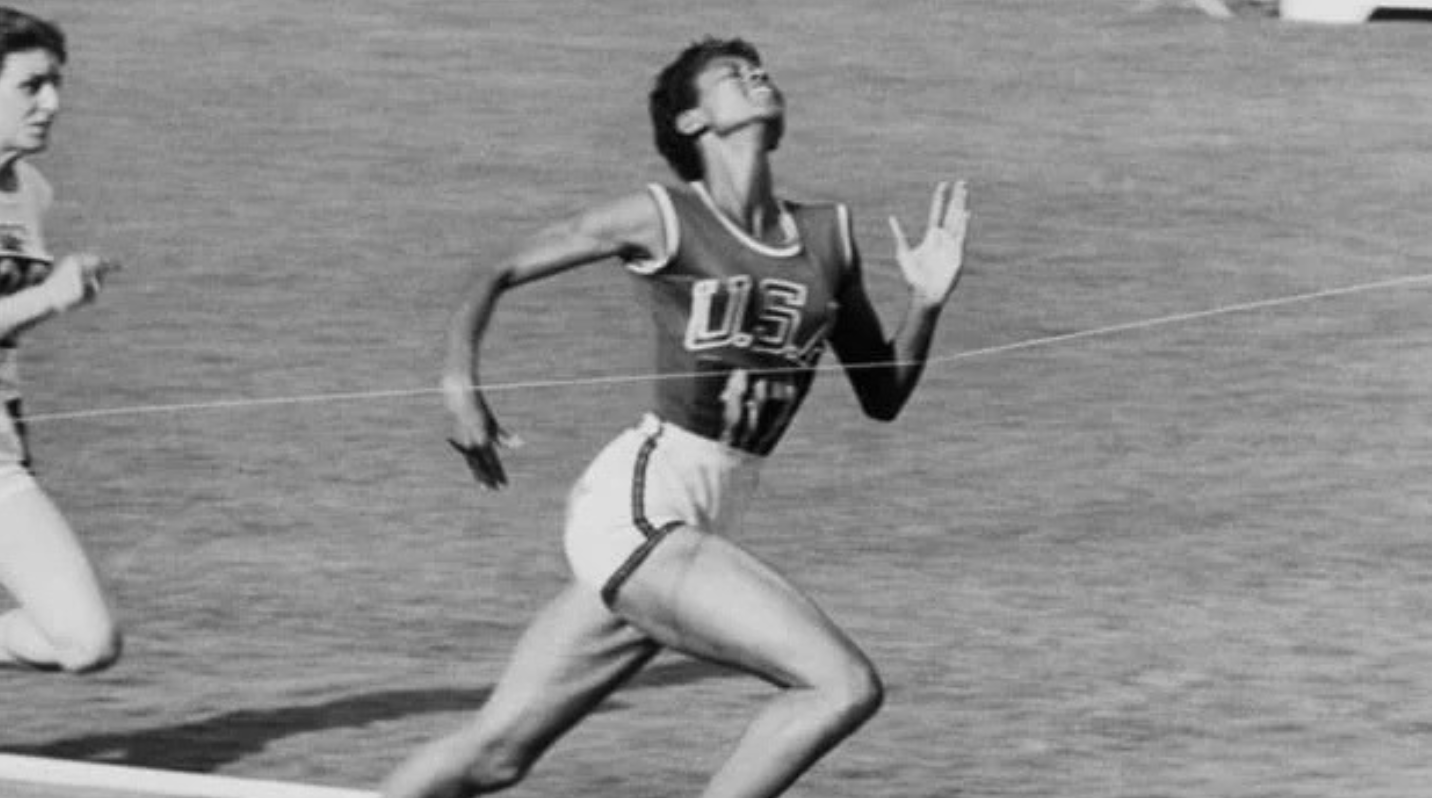
This Walda: Wilma Rudolph crossing the finish line to win her third gold medal at the 1960 Rome Olympics. No need for a blue circle to find her…she was always in the front.
My husband, an avid golfer, has a framed picture of the legendary Ben Hogan hanging in our home. Even with his love of golf, I never really understood why he had a picture of a guy’s backswing (a perfect backswing, Emily!!) on our wall.
But, after finding this picture of Wilma Rudolph, I get it. Never have I ever found a picture of someone running that makes me so emotional.
I’m a runner, and coach of runners, so, naturally the first thing that caught my eye was her gait.
But it wasn’t her flawless mechanics that got me. It’s her face.
She is STRIVING. WANTING. PROVING. It’s so clear. It’s right there.
It’s everything a coach wants in a runner - the want.
To see what you can do, how hard you can push. Betting on yourself.
Every cell in her body is focused on moving forward.
Don’t see it?
Give me a few paragraphs to explain.
Blanche Rudolph gave birth to Wilma Glodean Rudolph in St. Bethlehem (now Clarksville), Tennessee on June 23, 1940.
Born two months premature at 4.5 lbs, Wilma was the 20th of 22 children in Blanche and Ed Rudolph’s blended family. Neither Rudolph parent finished elementary school. Her father was a railway porter, picking up odd jobs where he could. Her mother earned money as a domestic worker. They lived in a wooden frame home with no electricity or indoor plumbing. Wilma’s clothes were made from old flour sacks. There was little money but a lot of love.
And thank goodness—Wilma would need a lot of support.
As a young child, Wilma battled double pneumonia, scarlet fever, the measles, the mumps, whooping cough and polio.
She missed all of kindergarten and the first grade.
Her battle with polio paralyzed her left leg and contorted her left foot.
The family doctor said she’d never walk again.
Her mother told her she would.
“I believed my mother,” she’d later write in her autobiography.
With her metal leg brace and corrective shoes, Wilma and her mother traveled to Meharry Hospital, the Black medical college of Fisk University (50 miles from their home in Clarksville), for a second opinion. There, the doctors provided a more promising outlook: if Wilma could make it to Meharry twice a week for physical therapy and the Rudolph family prioritized massaging Wilma’s left leg four times a day, she might be able to regain use of her left leg.
Twice a week, for the next five years, Wilma and her mother Blanche made the 50-mile trip on the back of a segregated Greyhound bus to Meharry Hospital. [That’s, roughly, 1,040 bus rides over 52,000 miles and a lot of effing hope]. And, Wilma’s siblings took turns massaging Wilma’s leg four times a day.
When her treatments ended, 10-year-old Wilma was eager to shed the crutches, the leg brace, the corrective shoes, the daily taunts, cripple!, from her classmates.
“I went from being a sickly kid the other kids teased to a normal person accepted by my peer group, and that was the most important thing that could have happened to me at that point in my life. I needed to belong, and I finally did.”
By the time Wilma was 12, she walked without suggestion of previous struggle.
It’s worth emphasizing (though obvious) that the young junior-high bound Wilma knew nothing of sports or being on a team by that point in her life.
Much of her childhood was marked with hospital visits, therapy treatments, and housebound dreams.
So, when she could move, she wanted to move more.
She made the basketball team but sat the bench her 7th, 8th, and 9th grade year.
From the bench, Wilma became a student of the game—so when she did get the chance to play, she’d be ready. She wanted to prove herself.
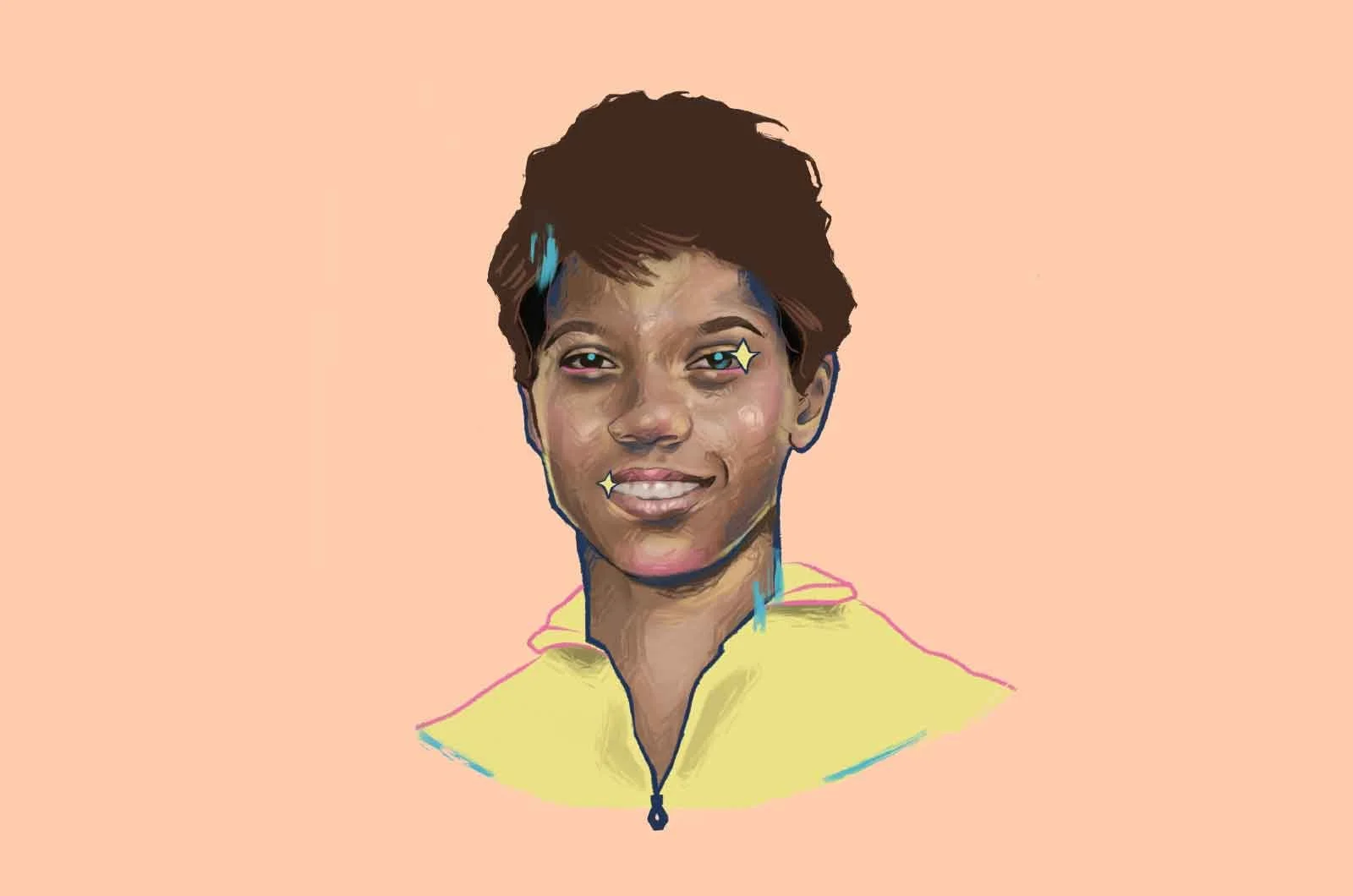
Illustration by Kylie Akia
When her basketball coach started a girls track team the spring of her freshman year, she joined.
And she won every single race that season. The girl who was once known as the “cripple” of Clarksville became a confident, fearless runner overnight.
By the time Wilma was a sophomore in high school, she was almost six feet tall— and she was determined to play ball.
Anytime she knew Coach Gray would be in the gym, she’d get friends to practice with her—desperate to show Gray the progress she had made, the determination she possessed.
That year, she made the team, she started, and made Tennessee history—setting a new scoring record in girls basketball: 803 points in 25 games. GET OUT OF HERE THAT IS AMAZING.
One basketball official took a special interest in Wilma, suggesting drills for Wilma to do after the game to improve her vertical. Eventually, he would invite her to his summer track program. His name was Ed Temple and he was the head coach of the women’s track team at Tennessee State University.
Temple wasn’t just being nice, he was scouting her.
She attended Temple’s summer track program in 1954. And began practicing with his Tennessee State Tigerbelles while she was still in high school.
Two years later, she qualified for the Olympics. What are the Olympics?, she’d ask.
With the financial support of several Clarksville families, Wilma became the youngest member of the USA women’s track and field team.
Just six years after she retired her metal leg brace, she anchored the women’s 4x100 relay team and secured an Olympic bronze medal for herself and her teammates.
Rudolph graduated from Burt High School in 1958 and just weeks before giving birth to her first child, Yolanda, enrolled at Tennessee State University. With the support of her family, she pursued her college education and qualified for the 1960 Olympics in Rome.
80,000 fans cheered Vil-ma! Vil-ma! Vil-ma! as 20-year-old Wilma Rudolph crossed the finish line in Rome, becoming the first American woman to win three gold medals (100-meter dash, 200-meter dash, 4x100-meter relay) in a single Olympic Games.
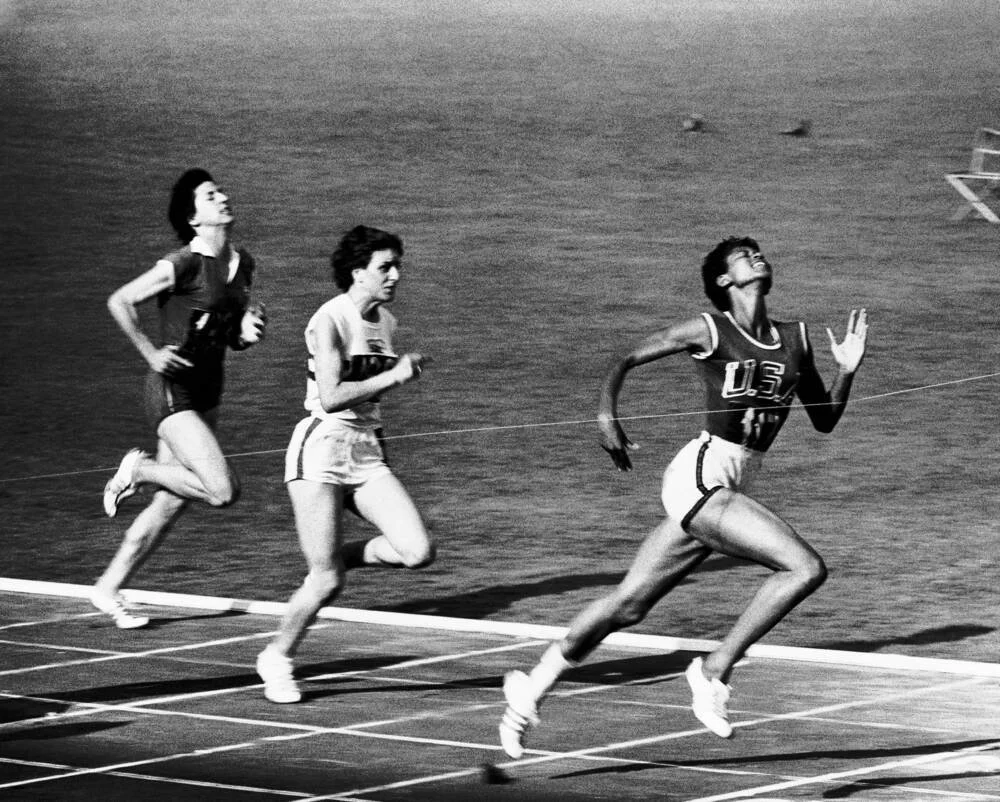
Do you see it now?
Everything she’s carrying. Everything she’s releasing.
The name calling
Thousands of miles on a Greyhound
Fears she’d never walk on her own
So much doubt, and fear
Never, ever, ever feeling like she belonged.
Running does that.
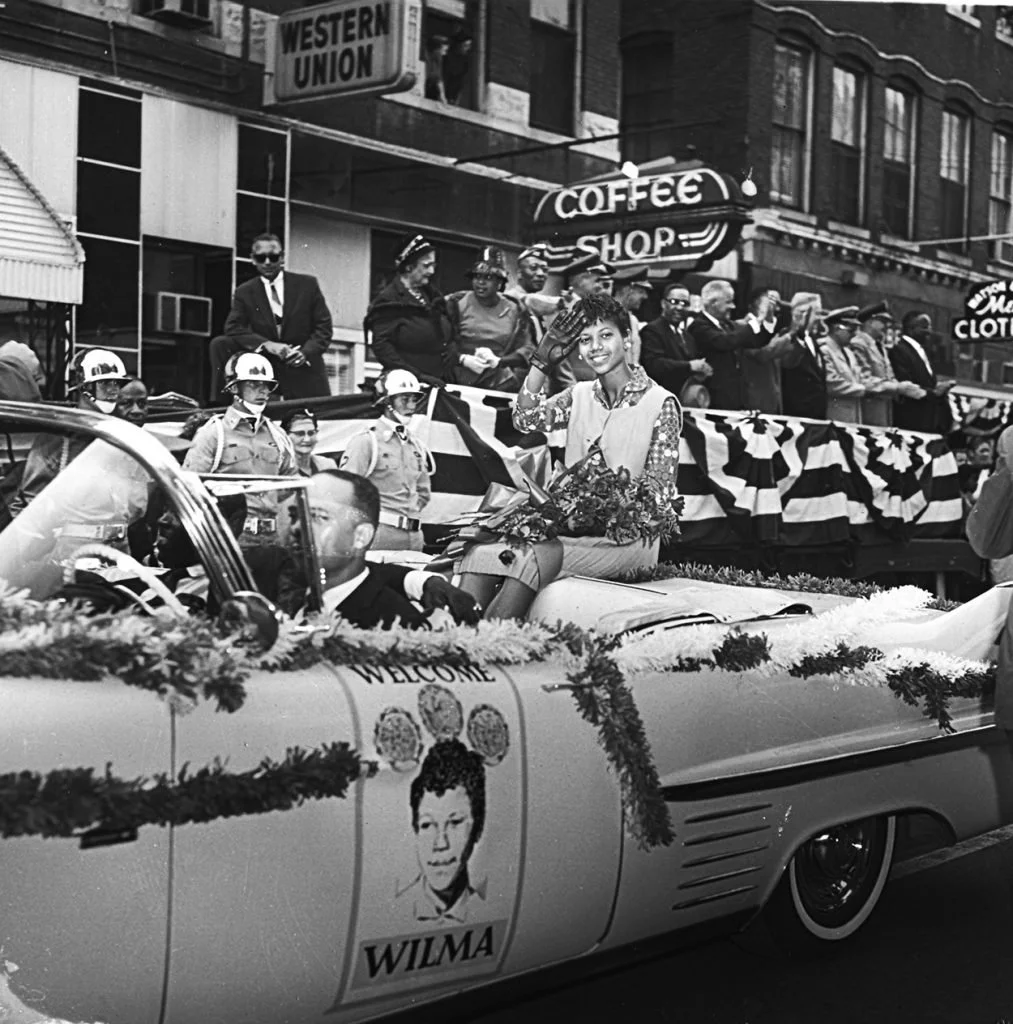
When she returned to Clarksville, city officials wanted to celebrate Rudolph. Historically, however, parades were segregated events.
But Wilma refused to participate under those terms.
And so, her victory parade became the city's first fully desegregated municipal event.
The enduring love and support of the Rudolph family, the transformational power of sport in a young girl’s life, and Wilma’s growing belief that she can—made this story possible.